Finding the best night running safety gear for 2026 isn’t just about looking cool under the streetlights — it’s about making sure drivers, cyclists, and other runners can spot you from a distance before it matters most. Every year, thousands of runners get out after dark without the right setup, and that’s a risk you can completely eliminate with the right kit.
Whether you’re training for a 5K, grinding through a night race, or just squeezing in miles after work, your visibility gear is as essential as your shoes. In this guide we break down exactly what gear categories you need, what features actually work in real-world conditions, and which products deserve a spot in your 2026 rotation. No fluff — just practical, tested advice so you can run smarter, safer, and more confidently the moment the sun goes down.
Why Most Runners Underestimate Night Run Visibility Risk
🏃 Gear We Recommend:
🔦 BLACK DIAMOND Spot 400 Headlamp — $54.99 at Bass Pro Shops
🏃 Nitecore UT27 MCT Pro 800 Lumen Trail Running Headlamp — $50.96 at Nitecore Store
⭐ Petzl Nao RL Headlamp — $119.06 at Oliunìd
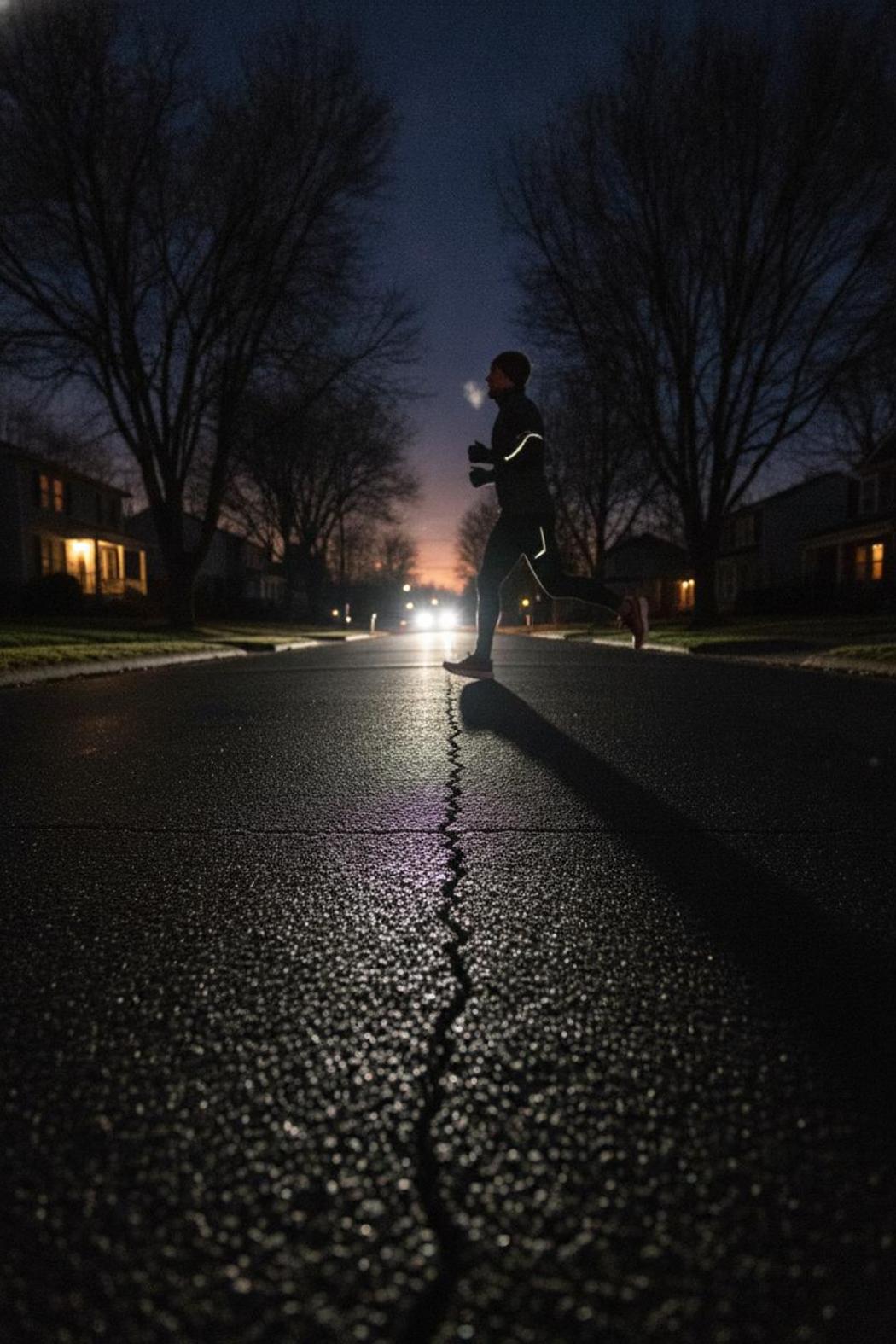
Here’s something most runners don’t want to hear: you are significantly harder to see at night than you think you are. It’s one of those uncomfortable truths that experienced night runners learn fast — usually after a close call with a car or cyclist that absolutely did not see them coming. Drivers at 40mph have roughly 1.5 seconds to react to something in their headlight beam. If you’re wearing dark leggings and a grey hoodie, that window shrinks to almost nothing. The assumption that streetlights and your own awareness are enough is genuinely one of the most dangerous habits in running culture right now.
The human eye is wired to detect motion and contrast, not static dark shapes blending into tarmac and shadow. What feels like a lit-up suburban street to you looks dramatically different from behind a windscreen. Throw in rain, fog, or even just the glare of oncoming headlights, and your visibility drops off a cliff. This is exactly why investing in the best night running safety gear 2026 has to offer isn’t about being overly cautious — it’s about being smart enough to keep running for years to come. The runners who treat visibility as optional are the ones who eventually have a story they’d rather forget.
And it’s not just traffic. Trail runners, park runners, towpath regulars — the risk shifts but doesn’t disappear. Cyclists moving fast on shared paths, dog walkers with extending leads, uneven ground that you can’t read properly in the dark. Night run visibility is a 360-degree problem, not just a front-facing one. The direction most runners ignore? Behind them. Cars approach from the rear, and a small reflective strip on the back of a vest does more lifesaving work per gram than almost any other piece of kit you own.
The good news is that the gear available right now makes it genuinely easy to be seen without sacrificing comfort or pace. A quality hi-vis running vest, a chest-mounted running light, and some reflective running gear built into your regular kit can completely transform how visible you are — without making you feel like a construction site. You don’t need to overhaul your entire wardrobe either. Start with one or two targeted pieces and build from there. The goal is to make it impossible for someone not to see you, not just technically possible for them to spot you if conditions are perfect.
Before your next night run, do one honest check: stand under normal indoor lighting and look at your outfit. If nothing catches your eye, nothing will catch a driver’s either. That’s your starting point.
Reflective Running Gear That Actually Works in 2026
🏃 Gear We Recommend:
🔦 BLACK DIAMOND Spot 400 Headlamp — $54.99 at Bass Pro Shops
🏃 Nitecore UT27 MCT Pro 800 Lumen Trail Running Headlamp — $50.96 at Nitecore Store
⭐ Petzl Nao RL Headlamp — $119.06 at Oliunìd
Let’s be honest — not all reflective gear is created equal, and if you’ve ever watched a “highly visible” running jacket disappear into the darkness at 50 metres, you know exactly what we mean. The good news is that the reflective running gear hitting the market in 2026 has made some serious leaps forward, and finding kit that genuinely keeps you safe on those night runs no longer means sacrificing comfort or style.
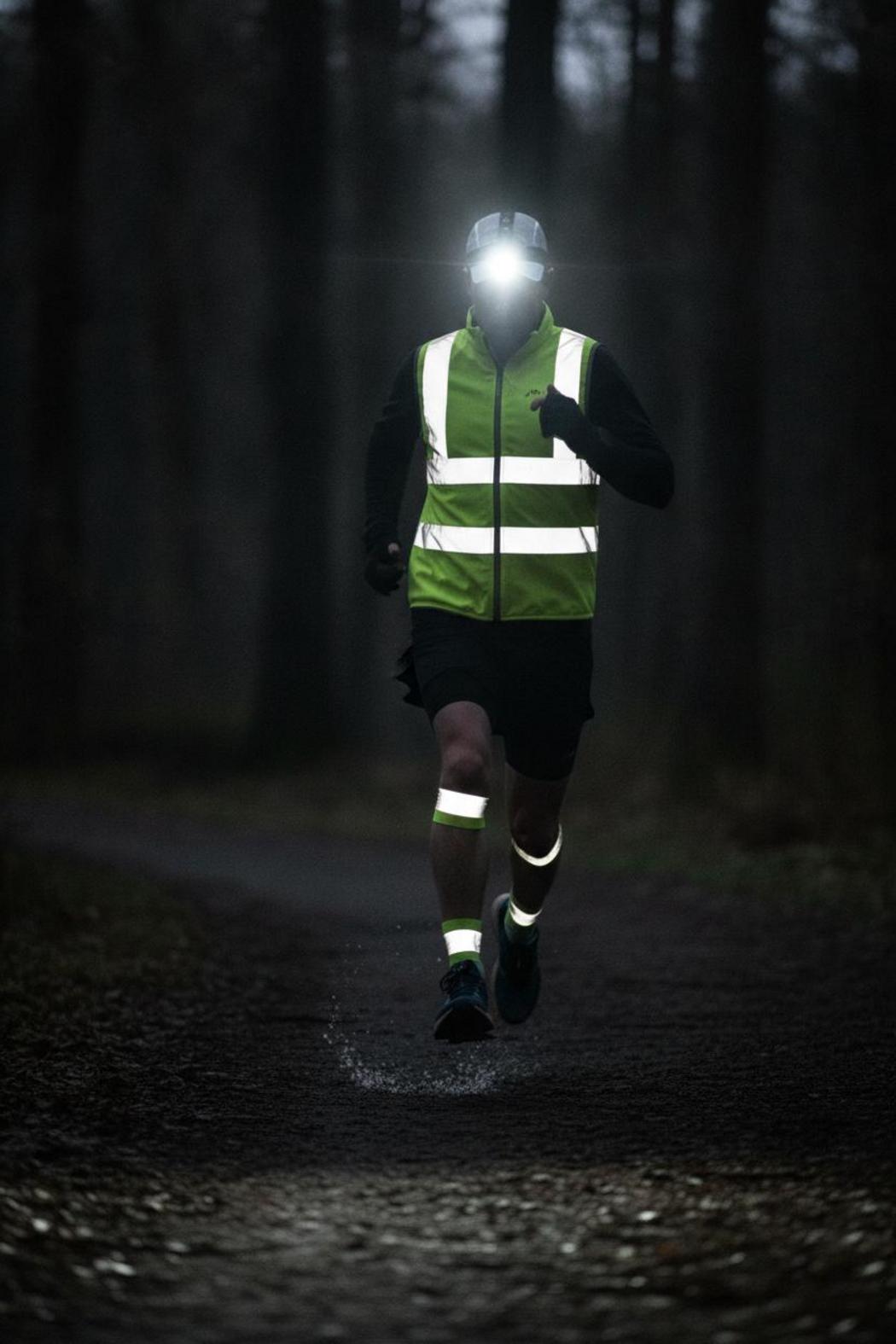
The real game-changer this year is 360-degree reflectivity. Older designs slapped a strip of reflective tape across the back and called it a day. The best night running safety gear 2026 has to offer wraps reflective panels around your shoulders, down your arms, and even across your chest — so drivers spot you whether they’re coming from the front, side, or behind. Brands like Proviz and Ronhill have doubled down on this approach, and when a car’s headlights hit you, the difference is genuinely striking. You’ll light up like a beacon rather than a vague shape in the shadows.
A solid hi-vis running vest remains one of the smartest investments you can make. They’re lightweight, they layer over almost anything, and the best ones use a mesh construction that breathes well enough that you won’t feel like you’re running in a bin bag. Look for vests with a snug but adjustable fit — anything that flaps and shifts around your torso will drive you mad after the first kilometre. Pair it with reflective arm bands or ankle bands for extra coverage at your moving joints, because movement catches a driver’s eye faster than a static panel ever will.
Don’t overlook your running shoes either. Many 2026 models from ASICS, Brooks, and New Balance have expanded their use of reflective detailing on the heel and toe box, which means every stride kicks up a flash of light. It’s a small detail, but at ground level where car headlights actually point, it makes a meaningful difference to night run visibility. If your current shoes are light on reflective elements, a few strips of adhesive reflective tape costs almost nothing and takes two minutes to apply.
The bottom line is this: layering your reflective running gear is the strategy that works. One vest is good. One vest plus reflective gloves, a light-coloured top, and shoes with good heel detailing is significantly better. Think about it the same way you think about layering for warmth — each piece adds something, and together they make you genuinely hard to miss. You’re putting in the effort to get out there and run in the dark, so make absolutely sure the world around you can see you doing it.
Best Running Lights: Headlamps, Clip-Ons, and Arm Lights Compared
🏃 Gear We Recommend:
🔦 BLACK DIAMOND Spot 400 Headlamp — $54.99 at Bass Pro Shops
🏃 Nitecore UT27 MCT Pro 800 Lumen Trail Running Headlamp — $50.96 at Nitecore Store
⭐ Petzl Nao RL Headlamp — $119.06 at Oliunìd
When it comes to the best night running safety gear 2026 has to offer, lighting is where you should start. Not because it looks cool (though it does), but because being seen is literally a matter of survival on dark roads and trails. The good news? Running lights have come a long way, and you’ve got real options depending on how and where you run.
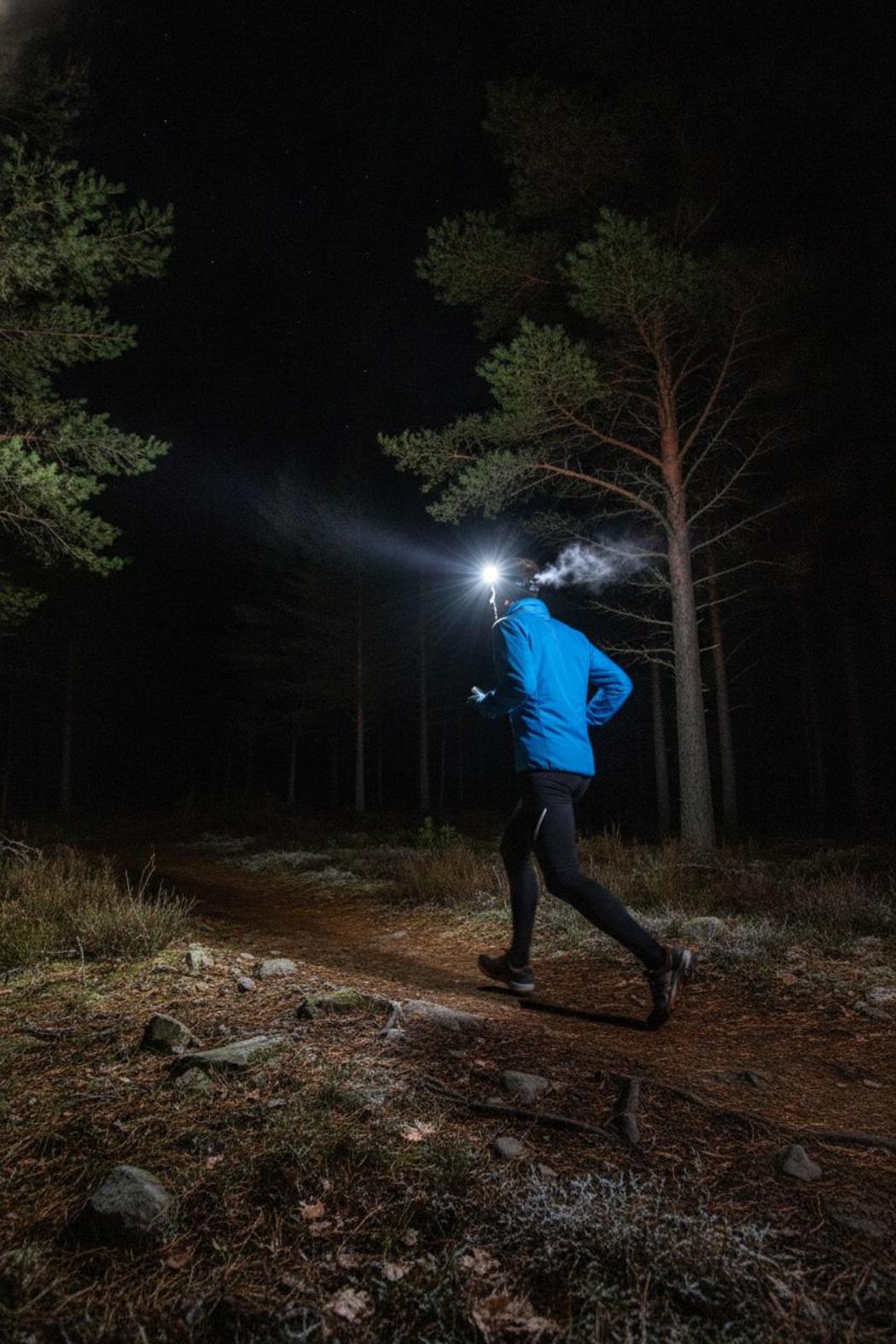
Headlamps are the workhorse of the night running world. They light up the path ahead, keep your hands free, and modern versions are surprisingly lightweight — we’re talking 60–90 grams for a decent one. Look for at least 200 lumens for road running and 300+ if you’re hitting trails with uneven terrain. Rechargeable models from brands like Petzl, Black Diamond, and Nitecore have largely killed off the battery-swap hassle, and a USB-C charge point means one less cable in your kit bag. The one thing runners often overlook with headlamps is bounce — a poorly fitted lamp bobs with every stride and drives you (and oncoming traffic) absolutely mad. A good headband strap with a rear stabiliser strap solves this fast.
Clip-on lights are the unsung heroes for road runners who want minimal fuss. Small, light, and brutally simple, they clip to your waistband, vest, or shoe and flash red or white to grab attention from drivers. They won’t light your path like a headlamp, but for built-up areas with street lighting they’re brilliant as a supplementary layer. Think of them as your backup, not your main event — because relying on a single clip-on light on a dark country road is the kind of decision you’ll regret about 400 metres in.
Arm lights sit somewhere between the two. Brands like Noxgear and Nathan have built flexible, wrap-around LED bands that give you 360-degree visibility without the head-bobbing issue of a headlamp. They’re especially effective when paired with a hi-vis running vest, because they amplify the reflective strips on your gear instead of replacing them. If you regularly run in traffic or join group night runs, arm lights are worth every penny — other runners can see you clearly from behind and to the side, which matters more than most people think until the first time someone nearly trips over you in the dark.
The honest advice? Don’t pick one and call it done. Layer your lighting like you layer your kit. A solid headlamp for navigation, a rear clip-on for driver visibility, and arm lights or a reflective vest to cover the angles your headlamp can’t. Night run visibility isn’t about any single piece of gear — it’s about making yourself impossible to miss from every direction. Get that right, and you can stop worrying about being seen and start focusing on the run itself.
Building Your Complete Night Run Safety Kit for Race Day and Training
🏃 Gear We Recommend:
🔦 BLACK DIAMOND Spot 400 Headlamp — $54.99 at Bass Pro Shops
🏃 Nitecore UT27 MCT Pro 800 Lumen Trail Running Headlamp — $50.96 at Nitecore Store
⭐ Petzl Nao RL Headlamp — $119.06 at Oliunìd
Whether you’re lining up for a night race or grinding through early morning training runs in the dark, your safety kit needs to work as hard as you do. The good news? Pulling together the best night running safety gear for 2026 doesn’t have to be complicated or expensive — it just has to be intentional. Think of it less like buying a bunch of gear and more like building a system where every piece has a job to do.
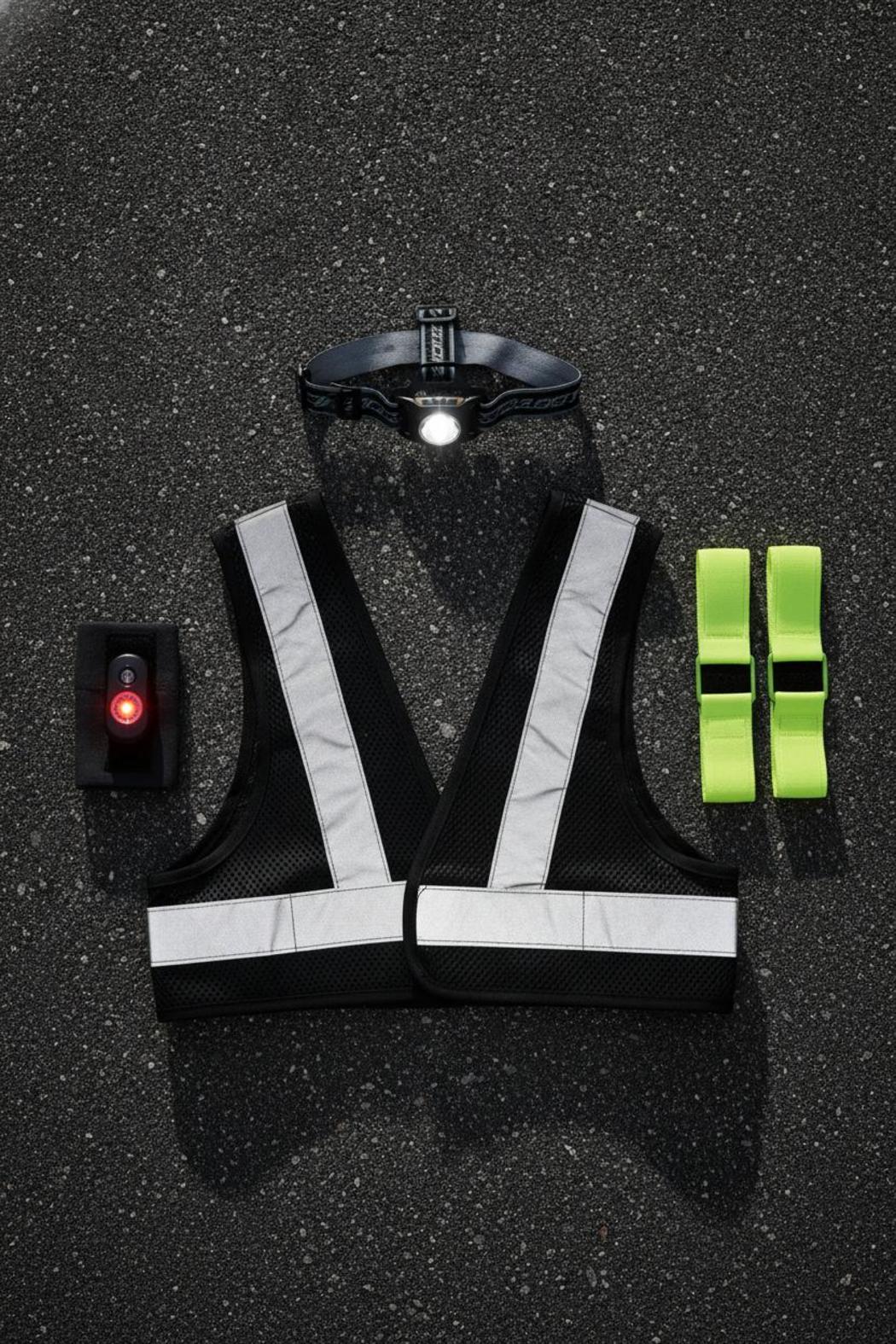
Start with your foundation layer: a quality hi-vis running vest. This is your single biggest visibility upgrade, full stop. A well-fitted reflective running vest sits snugly over your kit without bouncing, and the 360-degree reflective strips mean drivers and cyclists can pick you out from a serious distance. Don’t cheap out here — a vest that rides up or flaps around will drive you insane by kilometre three. Look for ones with adjustment straps front and back, and ideally a pocket or two for your phone and nutrition.
Lights are your next non-negotiable. You want two sources minimum: a headtorch for seeing where you’re placing your feet, and a rear clip light so traffic coming up behind you has fair warning. For training runs, a headtorch in the 200–400 lumen range handles most trails and roads comfortably. For race day, check the event rules — many night races have minimum lumen requirements, so know your numbers before you pin on that bib. A chest-mounted light can also complement your headtorch beautifully, reducing harsh shadows on technical terrain.
From there, layer in the smaller details that experienced night runners swear by. Reflective arm bands add extra flash points as your arms swing, which actually makes you more visible than a single solid reflective panel. Illuminated running gloves have come a long way in 2026 and are worth a look if you’re regularly out in sub-zero conditions. And don’t sleep on your footwear — several major brands now bake reflective detailing directly into their upper designs, giving you night run visibility without any extra gear to manage.
A quick checklist to make sure race-day kit is sorted the night before:
- Hi-vis or reflective vest — charged or clean and ready
- Headtorch — fully charged, fresh batteries if it takes them
- Rear light — charged and clipped to your waistband or vest
- Reflective arm bands or wrist lights as backup
- ID band or emergency contact written on your bib
The real secret to a strong night running safety kit is testing everything together before you actually need it. A training run two weeks out from race day is the perfect time to wear the full setup, dial in how your headtorch sits with your vest, and figure out what annoys you — because something always does. Fix it in training, not at the start line at 10pm with two hundred other runners waiting to go.
Conclusion
Gear up right, hit the dark roads with confidence, and let the night runs stack up — because the only thing standing between you and consistent training after sunset is the right kit on your body. The best night running safety gear for 2026 has never been smarter, lighter, or more accessible. Stop letting darkness be your excuse. Strap on your lights, layer up your reflectives, and own every kilometre after sundown. Your strongest miles might just happen when the rest of the world is asleep. Run The Party starts now.
Save this guide for later and pin it to your board! 📌