Knowing how to be visible running at night is one of the most important skills you can develop as a runner — and most people get it badly wrong. A single strip of reflective piping on your jacket isn’t enough when a car’s headlights are the only thing standing between you and a serious accident. If you’re training for a night run event, grinding out early-morning miles before sunrise, or just refusing to let shorter days cut your mileage, you need a real visibility strategy, not just a flashy vest.
In this guide we’re breaking down exactly what works: the right lights, the right reflective running clothes, the smartest routes, and the habits that experienced night runners use every single session. You’ll walk away with a practical checklist you can use tonight — no guesswork, no overpriced gimmicks, just the stuff that genuinely keeps you seen and safe when the sun goes down.
Lights First: The Non-Negotiable Foundation of Night Running Safety
🏃 Gear We Recommend:
🔦 Petzl Nao RL Headlamp — $189.95 at Running Warehouse US
🏃 Fenix HM65R-T V2 Rechargeable Trail Running Headlamp — $104.95 at Walmart – OpticsPlanet, Inc
✨ Petzl Bindi Headlamp — $50.00 at Fleet Feet
Before you lace up and head out into the dark, let’s get one thing straight: no pace, no playlist, and no training plan matters if drivers and cyclists can’t see you coming. Lighting isn’t a nice-to-have for night running — it’s the absolute baseline, the non-negotiable first step before everything else. If you’re serious about running after dark safety, you build your kit around visibility, and you build visibility around light.
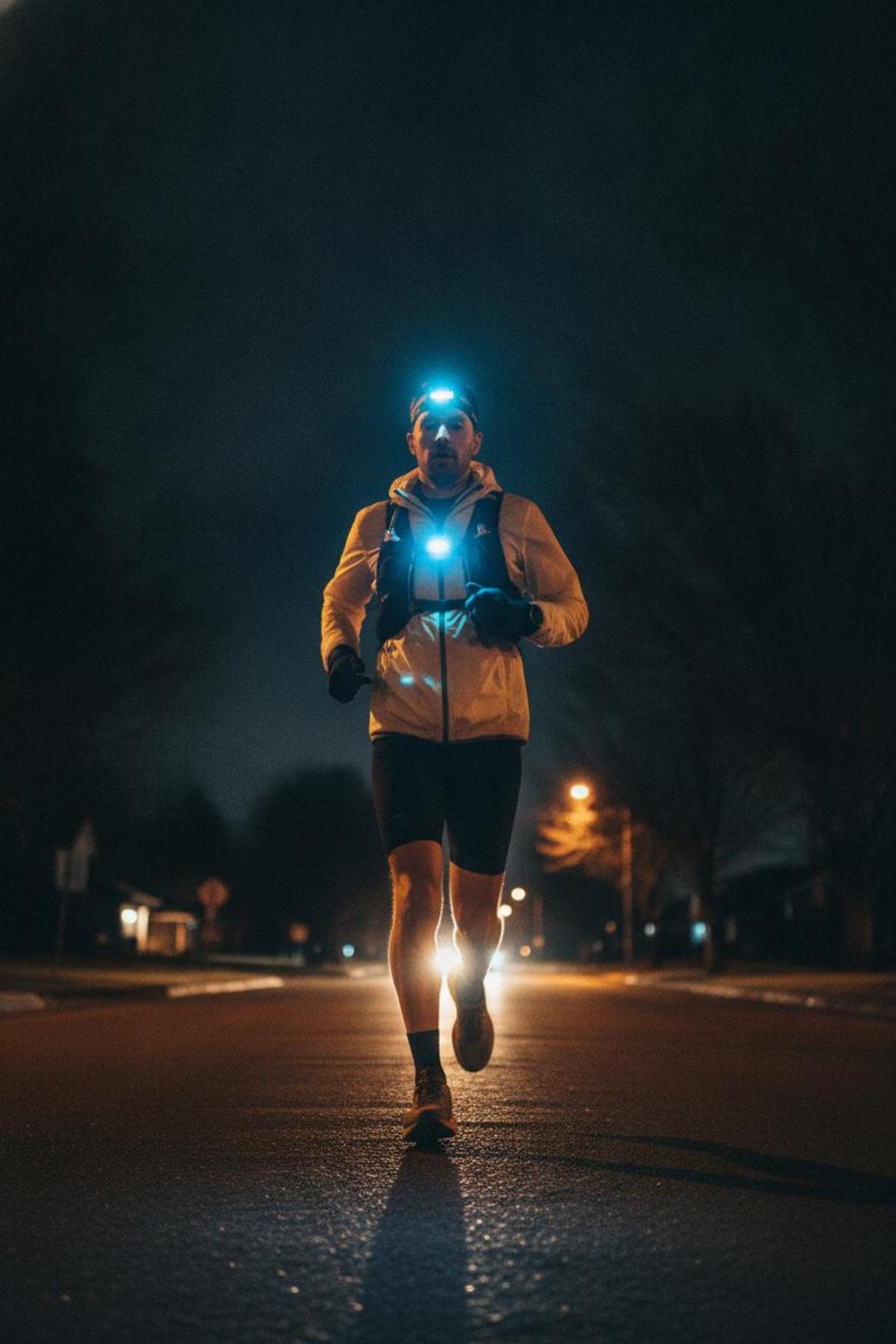
Start with a quality headtorch. Not a hiking lamp the size of a brick, but a lightweight running-specific headlamp — something in the 150 to 400 lumen range that sits snug without bouncing around on your forehead. This does two jobs at once: it shows you the road ahead so you’re not tripping over kerbs or pothole surprises, and it makes you visible from the front. Look for a lamp with a red rear-flash mode too, because that single blinking light at the back of your head can be spotted from serious distance by drivers coming up behind you.
Then add a clip-on rear light to your waistband or vest. Think of it like cycling — front and rear lights aren’t optional on a bike after dark, and the same logic applies when you’re the vehicle. A small, lightweight LED tail light costs next to nothing and can be the difference between being spotted from 200 metres away versus being almost invisible. Knowing how to be visible running at night really does come down to covering both directions consistently, every single run.
Don’t fall into the trap of thinking your phone torch counts, either. Holding your phone in your hand to light the path ahead throws off your arm swing, messes with your form, and leaves your rear completely dark. Dedicated running lights are purpose-built for this, and once you’ve run with a proper setup, you’ll wonder how you ever went out without one.
One practical check worth building into your routine: do a quick battery test before every run. Dead lights are as useful as no lights, and there’s nothing worse than realising your headtorch is fading three kilometres from home on an unlit road. Keep a charging cable by your running kit and make it a habit the same way you’d check your laces. Once your lights are sorted and reliable, you’ve got the foundation locked in — and everything else, from reflective running clothes to route planning, layers on top of that strong, bright base.
Reflective Running Clothes and Gear That Actually Get You Noticed
🏃 Gear We Recommend:
🔦 Petzl Nao RL Headlamp — $189.95 at Running Warehouse US
🏃 Fenix HM65R-T V2 Rechargeable Trail Running Headlamp — $104.95 at Walmart – OpticsPlanet, Inc
✨ Petzl Bindi Headlamp — $50.00 at Fleet Feet
Let’s be real — a single glow-in-the-dark stripe on the back of your old running jacket isn’t going to cut it when you’re sharing the road with cars at 10pm. If you’re serious about running after dark safety, it’s time to treat visibility the same way you treat your training plan: with intention. The goal isn’t just to be *technically* visible — it’s to be unmistakably, obviously, can’t-miss-it visible from every angle, at real distance, in real conditions.
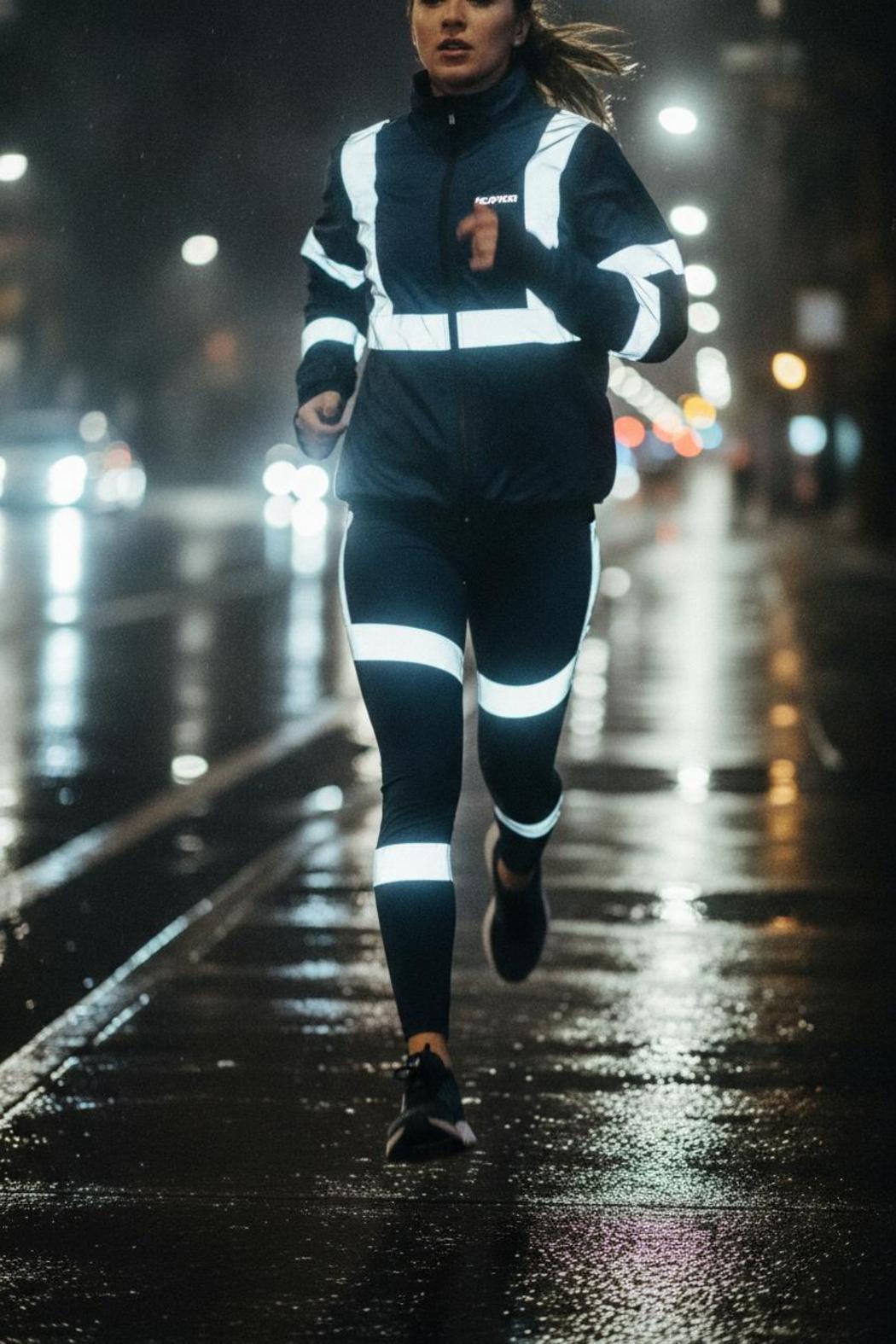
Start with your clothing. Modern reflective running gear has come a long way from those stiff, crinkly vests that made you look like a crossing guard. Brands like Proviz, Craft, and Nathan now make jackets, tights, and long-sleeves where the entire outer shell is reflective — meaning headlights hit you and you light up like a beacon. Look for 360-degree reflectivity, which means panels on your front, back, and sides. A driver pulling out of a side street needs to see you just as clearly as one coming straight at you.
Layering your visibility is the smartest approach. Don’t rely on one piece of kit to do everything. Wear a reflective jacket, add a lightweight LED clip to your chest or back, and consider a headlamp even if the route is lit. A chest-mounted light makes you look like an oncoming runner — an actual moving human — rather than a static roadside object, and that cognitive difference matters to drivers. Gloves and shoes with reflective detailing add small but meaningful flashes of movement that catch eyes at a distance.
Knowing how to be visible running at night also means thinking about colour during daylight hours and light output after dark. Neon yellow or orange is outstanding in low-light dusk conditions, but once it’s genuinely dark, colour matters far less than active light and retroreflective material. So if you run that awkward in-between window — leaving the office at 6pm in winter — a hi-vis neon layer combined with reflective strips gives you the best of both worlds.
One thing experienced night runners know that beginners often overlook: your head position changes everything. A headlamp worn on your head points wherever you look, which means it sweeps across traffic at intersections naturally. Pair that with a running cap that has a reflective brim and you’ve got your face and upper body lit from multiple angles. Small detail, big impact. Gear up properly, run confidently, and make every night session feel like the well-prepared, well-lit adventure it deserves to be.
Smart Route Planning: Where and How You Run After Dark Matters
🏃 Gear We Recommend:
🔦 Petzl Nao RL Headlamp — $189.95 at Running Warehouse US
🏃 Fenix HM65R-T V2 Rechargeable Trail Running Headlamp — $104.95 at Walmart – OpticsPlanet, Inc
✨ Petzl Bindi Headlamp — $50.00 at Fleet Feet
Before you even think about lacing up for an after-dark run, take a hard look at your route. The streets you cruise through at noon feel completely different at 10 PM, and that difference matters more than most runners realize. Poorly lit back roads, uneven pavements hidden in shadow, and unpredictable traffic patterns can turn a casual evening jog into a genuinely risky situation. Smart route planning is one of the most underrated night running tips out there, and it costs you nothing except a few minutes of thinking before you head out.
Stick to roads and paths you already know well. This isn’t the time to explore that interesting-looking trail you spotted last weekend. Familiar ground means you already know where the kerbs drop, where the surface gets rough, and where traffic tends to fly. If you want to mix things up, do your route-scouting in daylight first. Knowing exactly what’s underfoot lets you move confidently instead of shuffling along nervously, and confident movement actually makes you more visible because you’re running upright and consistent rather than stopping and starting unpredictably.
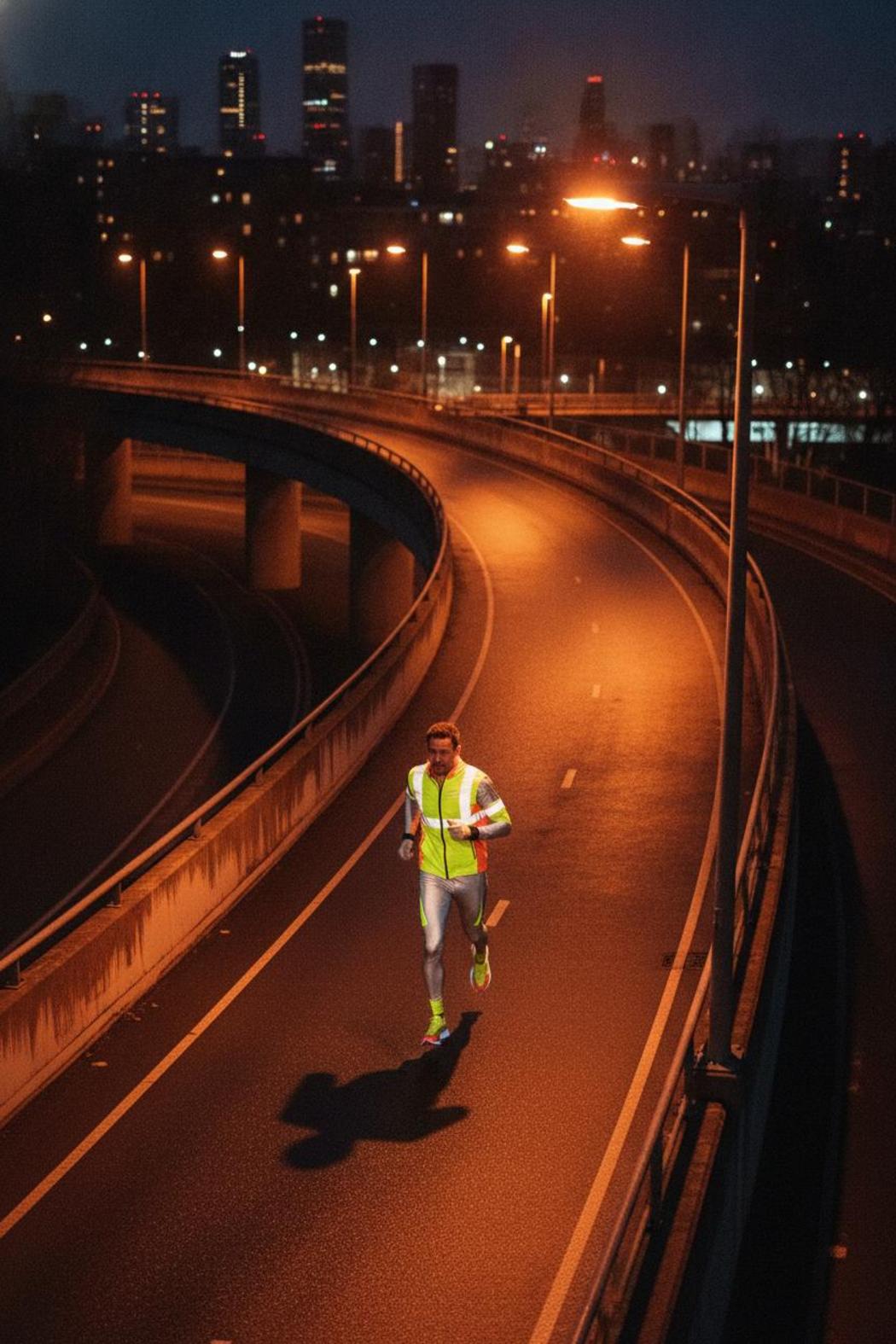
Prioritize well-lit streets wherever you can, even if it adds a few extra minutes to your distance. Running under streetlights does a lot of the heavy lifting when it comes to how to be visible running at night — your reflective running clothes work exponentially better when there’s ambient light bouncing off them. A reflective vest in pitch darkness is doing maybe 20% of its job. That same vest under a streetlight is doing 100%. Work with the infrastructure your city already has rather than fighting against it.
Loop routes are your friend after dark. Running a shorter loop two or three times instead of a long out-and-back keeps you close to home, means you’re passing familiar checkpoints regularly, and makes it easier for someone to find you if something goes wrong. Share your planned route with a friend or drop a pin before you leave — not because you’re being paranoid, but because experienced runners treat this as standard practice. It takes ten seconds and it’s just good sense.
Finally, run against traffic on roads without pavements. You want to see headlights coming at you, not have cars appearing silently from behind. Keep to the right side of the path where possible so cyclists coming from behind have room to pass, and stay alert at every junction — drivers turning left or right are often looking for other cars, not a runner stepping off the kerb. Put the route planning in before you run, and then you can actually enjoy the run itself. The night is genuinely one of the best times to be out — quieter, cooler, and with a completely different energy. Set yourself up right and go claim it.
Night Run Race Day: How to Stay Visible and Crush Your Fun Run Event
🏃 Gear We Recommend:
🔦 Petzl Nao RL Headlamp — $189.95 at Running Warehouse US
🏃 Fenix HM65R-T V2 Rechargeable Trail Running Headlamp — $104.95 at Walmart – OpticsPlanet, Inc
✨ Petzl Bindi Headlamp — $50.00 at Fleet Feet
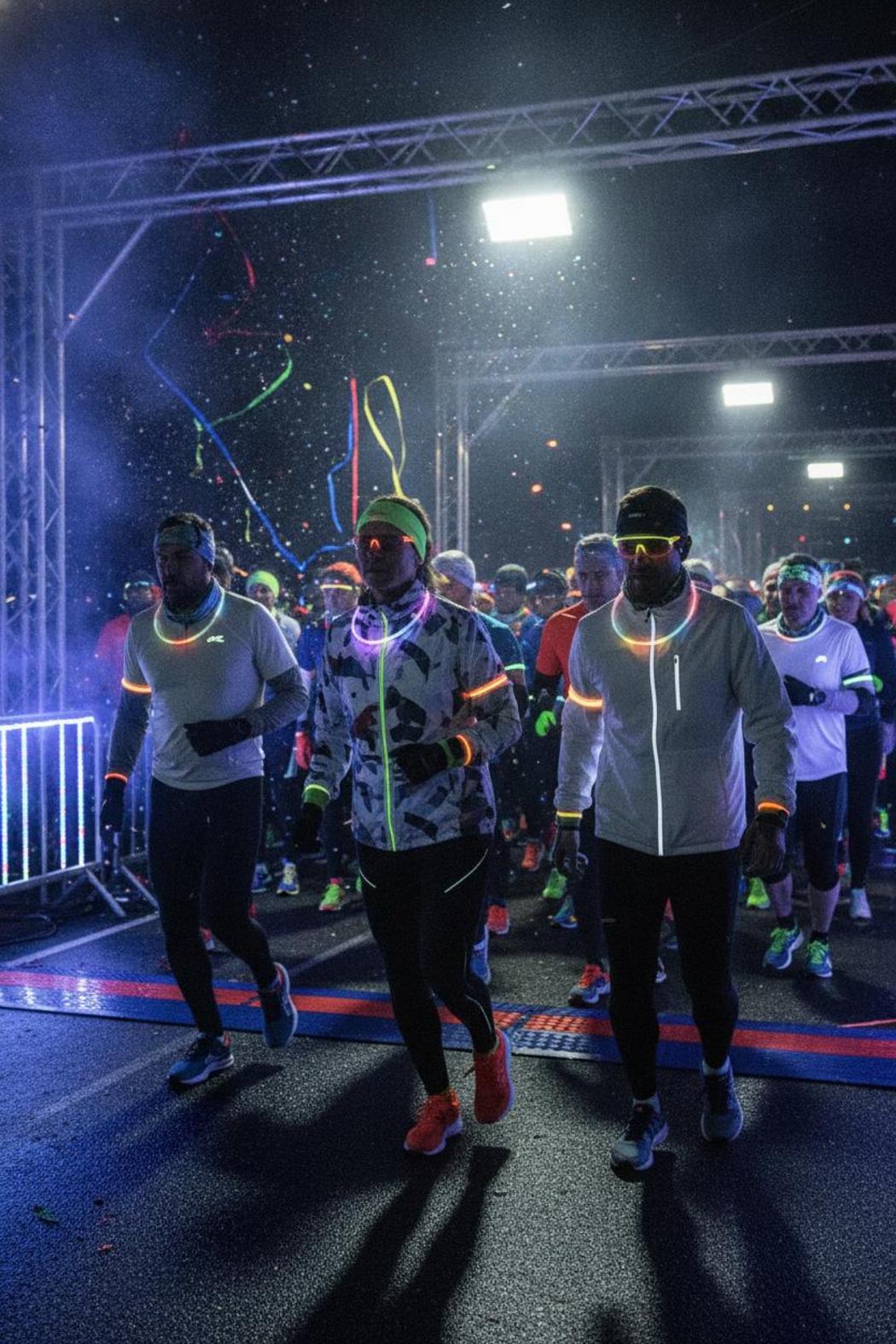
Race day energy is something else entirely. Whether you’ve signed up for a glow run, a night 5K, or one of those epic illuminated fun runs that wind through city streets after dark, the atmosphere is electric and the crowd makes you feel invincible. But even with hundreds of other runners around you, staying visible and safe is still your responsibility — and it’s honestly one of the easiest wins you can make before you even lace up.
Start with your kit. Most organised night runs will hand out glow sticks, LED wristbands, or light-up accessories at registration, and you should absolutely use every single one of them. Stack them on. Layer them up. But don’t stop there — wear your own reflective running clothes underneath whatever costume or event gear you’re rocking. A reflective vest, a light-up clip on your back, or even a simple headlamp can make a real difference, especially in the sections of the course where the crowd thins out and you’re moving through darker patches between the lit zones.
Knowing how to be visible running at night goes beyond just slapping on a hi-vis bib and hoping for the best. Think about your angles. Reflective strips on your ankles and wrists catch light from multiple directions as you move, which is far more effective than a single strip across your chest. If you’re running with friends, spread out your lighting so the group as a whole is visible as a unit — it looks great in photos too, honestly.
Course marshals and volunteers are your best friends on race night. They’re positioned at the trickier spots for a reason, so pay attention to their signals, especially if the route crosses any open roads or shared paths. Even at a well-organised event, there can be moments where traffic or cyclists share your space, and being seen running clearly and predictably matters just as much as your pace.
The golden rule for any night run event: treat it like the real run it is, not just a party with shoes on. Warm up properly, know the course map, and check your gear actually works before you hit the start line — dead batteries on your headlamp at kilometre three is nobody’s idea of fun. Get your night running tips dialled in before the big night, show up prepared, and then go absolutely enjoy every glowing, cheering, high-energy second of it. You’ve trained for this. Now go run it.
Conclusion
You’ve got the gear knowledge, the route strategy, and the race-day playbook — now it’s time to lace up, light up, and own the dark. Knowing how to be visible running at night isn’t just about safety — it’s about confidence, freedom, and claiming every mile after sunset as yours. The night doesn’t have to slow you down; it can be where you truly shine. So gear up, step out, and make the dark your favourite training ground. The road is waiting — and it’s yours.
Save this guide for later and pin it to your board! 📌